Nov Back to list
Heart Valves and Industrial Fixtures which valves are anchored by chordae tendineae Performance Analysis
In human anatomy, the structural integrity of heart valves is a marvel of biological engineering, where the question of which valves are anchored by chordae tendineae is central to understanding cardiac function. Unlike simpler valves, these specific structures utilize a complex tethering system to prevent prolapse under high pressure.
While this anatomical precision governs blood flow, the industrial world mirrors this need for stability and precision through high-grade mechanical components. Just as biological anchors ensure a valve does not fail, industrial fixtures and precision tools ensure that manufactured parts maintain their exact geometric specifications during high-stress machining.
Understanding the relationship between support structures and functional outcomes—whether in a biological heart or a precision machine shop—reveals the universal importance of stability. This article explores the biological anchors of heart valves and draws a parallel to the precision casting solutions used in modern manufacturing to maintain critical alignments.
Biological Anchors of the Heart
When addressing which valves are anchored by chordae tendineae, the answer lies in the atrioventricular (AV) valves: specifically the mitral valve (between the left atrium and left ventricle) and the tricuspid valve (between the right atrium and right ventricle). These "heart strings" are fibrous cords that connect the valve leaflets to the papillary muscles.
The primary function of these anchors is to provide tension that prevents the valve leaflets from swinging backward into the atria during ventricular contraction (systole). Without these chordae tendineae, the heart would suffer from valvular insufficiency, much like how a machine tool without a stable fixture would produce warped components.
The Mechanics of Chordae Tendineae
The mechanical logic of the chordae tendineae is based on tension and resistance. These cords do not actively pull the valves shut; rather, they act as limiters. When the ventricle contracts, the pressure forces the valve leaflets closed, and the chordae tendineae ensure they stop at the perfect point of closure, maintaining a tight seal that directs blood forward into the aorta or pulmonary artery.
This biological system requires extreme material durability. The collagen-rich fibers must withstand millions of cycles of tension without stretching or snapping. If these cords fail—a condition known as chordal rupture—the valve fails to anchor, leading to regurgitation.
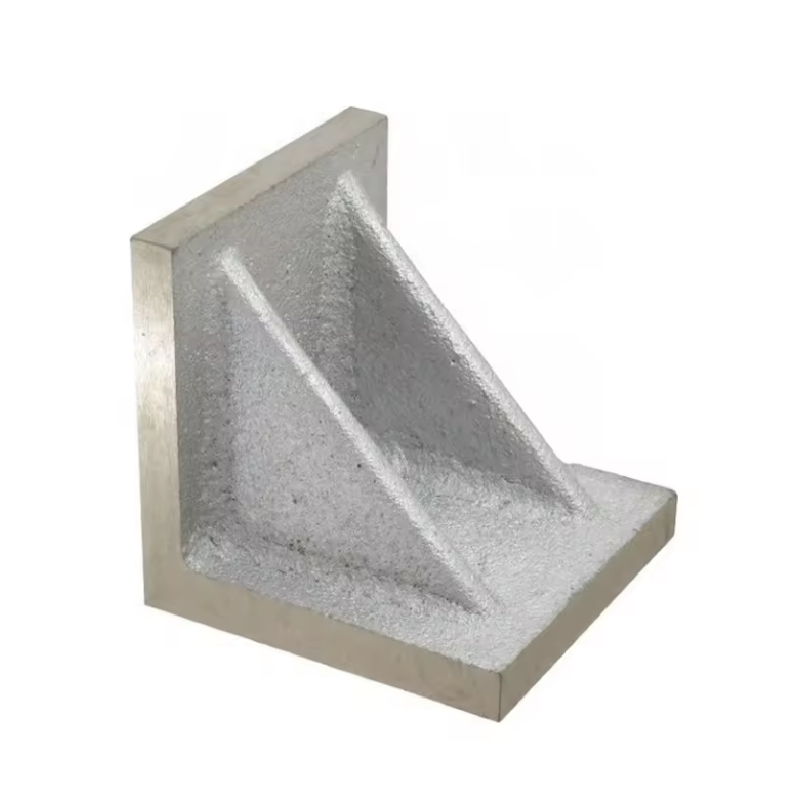
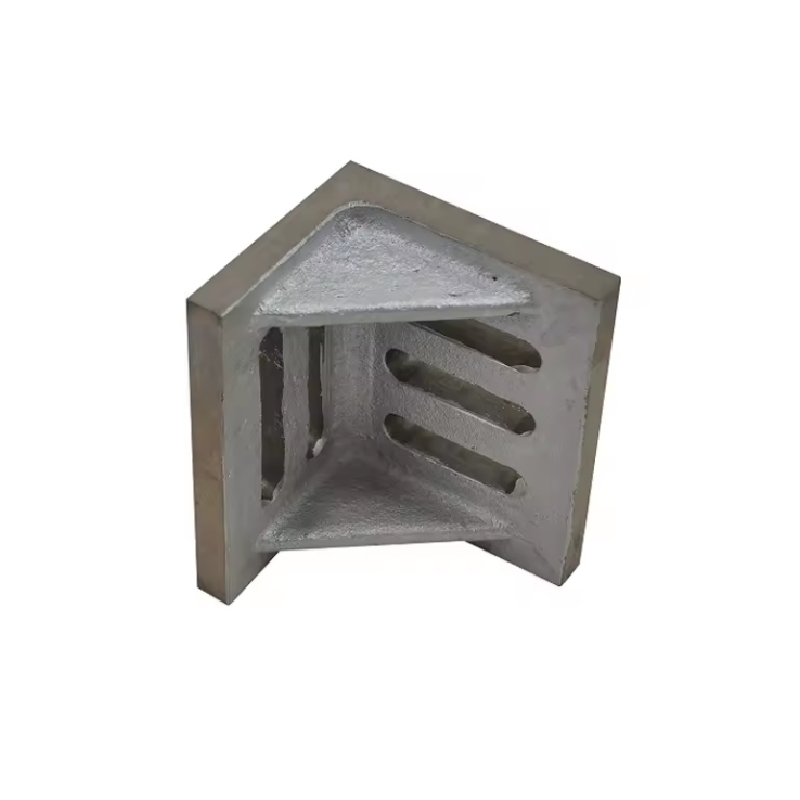
In the industrial realm, this translates to the need for materials that resist deformation over thousands of cycles. For instance, the use of HT200-HT300 gray cast iron in industrial angle plates provides a similar "stability anchor" for mechanical parts, ensuring that 90-degree alignments remain constant even under heavy clamping loads.
Parallelism in Mechanical Precision
Translating the biological concept of "anchoring" to the workshop, the equivalent is the use of high-precision fixturing. In precision manufacturing, the goal is to eliminate any unplanned movement or "prolapse" of the workpiece during machining. This is achieved through the use of cast iron angle plates and measuring tools.
Precision in both biology and industry depends on the ability of a support structure to maintain a fixed geometric relationship under pressure, preventing failure through strategic tension or rigidity.
Companies like Storaen utilize resin sand casting and annealing processes to remove internal stresses from their angle plates. This creates a "stress-relieved" base that acts as a reliable anchor for aerospace or automotive components, ensuring that perpendicularity is maintained within microns, mirroring the critical seal required by heart valves.
Stability Indices in Structural Design
To evaluate the effectiveness of a support system, engineers look at stability indices. In the case of cast iron angle plates, the hardness of the working surface (typically HB160-240) and the precision grade (Level 0 to Level 3) determine how well the tool anchors the workpiece.
Higher hardness and lower precision grades correlate with a higher stability index, meaning the tool can maintain its 90-degree alignment more effectively under varying temperatures and loads. This is a conceptual mirror to how the thickness and tension of chordae tendineae determine the efficiency of cardiac valve closure.
Figure 2. Comparative Stability Index of Fixture Materials
Applications of Rigidity in Industry
In a typical industrial setting, such as the production of automotive transmission housings, rigidity is non-negotiable. A cast iron box angle plate is used as the primary anchor to ensure that drilled holes are perfectly perpendicular to the mating surface. If the "anchor" drifts by even a few microns, the resulting part may fail during assembly, similar to how a slightly loose chordae tendineae can lead to valvular leakage.
For aerospace components like jet engine brackets, the requirements are even more stringent. Here, Class 0 cast iron plates (flatness ≤ 0.0005mm/m) serve as the gold standard for CMM calibration. By providing a vibration-dampening, rigid base, these tools ensure that the structural integrity of the aircraft is maintained through repeatable, high-precision measurement.
Evolution of Precision Casting Standards
The industry has moved toward materials that combine high hardness with internal stability. The adoption of HT200-HT300 materials, combined with resin sand casting, allows for a more uniform pearlitic microstructure. This microstructure is essential for abrasion resistance, allowing a fixture to withstand 10,000+ clamping cycles without losing its 90-degree squareness.
Furthermore, the integration of scraping and grinding technologies has refined the working surfaces of these tools. By reducing surface roughness (Ra ≤ 1.6μm), manufacturers can achieve a more consistent contact area between the workpiece and the anchor, reducing the risk of microscopic shifts during machining.
Looking forward, the challenge lies in maintaining this precision across larger scales. As components grow in size, the impact of thermal expansion becomes more pronounced. Future developments in casting will likely focus on alloys that offer even lower coefficients of thermal expansion while maintaining the high hardness required for industrial longevity.
Evaluating Support Systems: Bio vs Industrial
Whether comparing the chordae tendineae of the mitral valve to a cast iron angle plate, the evaluation criteria remain the same: reliability under stress. In biology, failure is measured by regurgitation; in industry, failure is measured by geometric drift or surface wear.
The trade-off in both systems is often between flexibility and rigidity. While heart valves need a degree of elasticity to function, industrial tools require absolute rigidity to ensure accuracy. However, both must be "stress-relieved"—one through biological adaptation and the other through industrial annealing.
The following table provides a conceptual comparison of how "anchoring" functions across these two seemingly different worlds, highlighting the shared requirement for structural consistency.
| Evaluation Factor | Heart Valve (AV) | Industrial Fixture | Critical Requirement |
|---|---|---|---|
| Anchoring Element | Chordae Tendineae | Cast Iron Angle Plate | Geometric Stability |
| Material Basis | Collagen Fibers | HT200-HT300 Iron | Wear Resistance |
| Failure Mode | Valve Prolapse | Squareness Drift | Loss of Seal/Fit |
| Stress Management | Papillary Muscle Tension | Resin Sand Annealing | Internal Stress Relief |
| Cycle Endurance | Continuous Heartbeat | 10,000+ Clamping Cycles | Fatigue Resistance |
| Precision Goal | Unidirectional Flow | 90° Perpendicularity | Repeatable Accuracy |
Questions & Answers
The atrioventricular valves, specifically the mitral valve (left side) and the tricuspid valve (right side), are anchored by chordae tendineae. These fibrous cords connect the valve leaflets to the papillary muscles of the ventricles, preventing the leaflets from prolapsing into the atria during the heart's contraction phase.
An industrial angle plate, such as those made from HT200-300 cast iron, provides a rigid, perfectly square (90°) base. It "anchors" a workpiece by providing a stable reference surface that prevents the part from shifting or tilting during machining, ensuring that all vertical and horizontal alignments remain exact.
HT200-HT300 gray cast iron is preferred because it offers a high hardness (HB160-240) and excellent vibration-dampening properties. This combination ensures that the tool does not wear down quickly under heavy use and remains stable even in noisy workshop environments, maintaining its precision over thousands of cycles.
In the heart, a rupture of the chordae tendineae leads to valve prolapse and blood regurgitation, reducing cardiac efficiency. In manufacturing, if a fixture fails or drifts, the workpiece loses its squareness, leading to parts that do not fit together, resulting in costly rework or total scrap of the component.
Precision is verified using Coordinate Measuring Machines (CMM) and standards like GB/T 6092-85 or ISO 1101. These tools check the flatness of the working surface and the parallelism between surfaces, ensuring that the precision grade (Level 0-3) meets the required microns of tolerance.
While aluminum or steel can be used, they often lack the dampening properties or the wear resistance of gray cast iron. Granite is an alternative for extreme precision but lacks the versatility and clamping strength of cast iron in heavy-duty milling or drilling applications.
Final Thoughts
The concept of anchoring is fundamental to both life and industry. Whether it is the chordae tendineae ensuring the unidirectional flow of blood in the heart or a high-precision cast iron angle plate ensuring the squareness of a turbine blade, the principle is the same: structural stability prevents functional failure.
By prioritizing materials with high hardness and stress-relieved internal structures, manufacturers can replicate the reliability of biological systems in the industrial world. Investing in precision-grade anchoring tools is not just about accuracy—it is about ensuring the longevity and integrity of every part produced.
- Heart Valves and Industrial Fixtures which valves are anchored by chordae tendineae Performance Analysis
- Spirit Level Technical Analysis and Performance Metrics
- Hard Seal Gate Valve Performance Analysis
- Butterfly Valve Technical Performance Analysis
- Precision Bar Level how to replace a toilet fill valve Performance Analysis