Oct Back to list
Butterfly Valve Technical Performance Analysis
Selecting the right flow control mechanism often comes down to a balance between spatial constraints and sealing reliability. In high-volume industrial piping, the ability to achieve a rapid shut-off without the bulk of traditional gate valves is a primary engineering requirement.
The operational efficiency of a system frequently hinges on how well the valve handles throttling and isolation under varying pressure loads. While many options exist, the quarter-turn logic remains the most effective for systems requiring agility and low pressure drop.
Understanding the nuances of the butterfly valve—from concentric designs to triple-eccentric high-performance models—allows engineers to minimize maintenance costs and prevent catastrophic leakages in harsh environments.
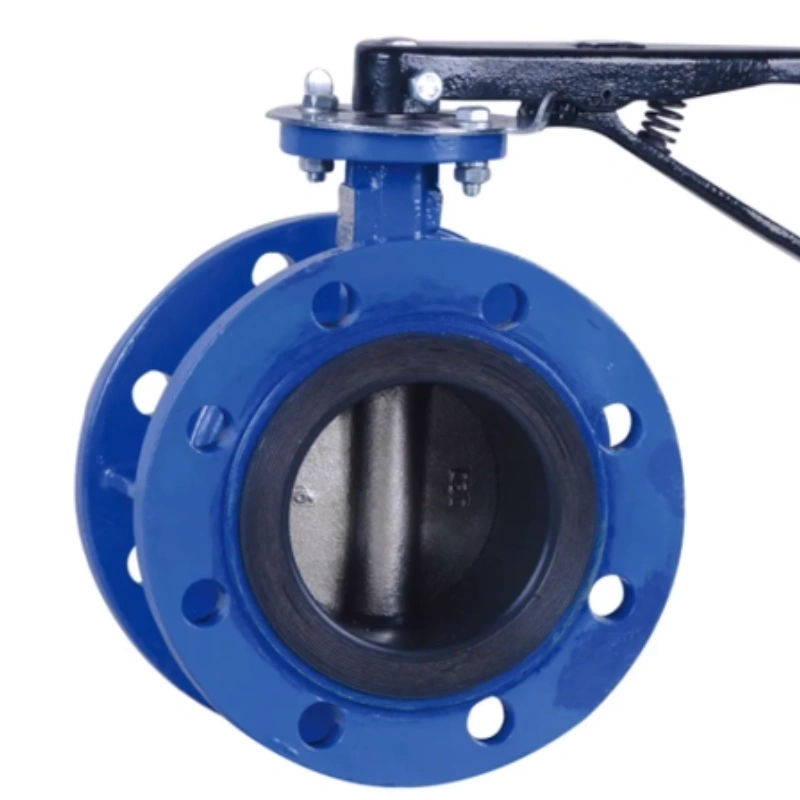
Fluid Dynamics of Quarter-Turn Valves
The fundamental utility of a butterfly valve lies in its simplicity: a rotating disc that pivots around a central axis. Unlike linear valves, the quarter-turn operation allows for rapid transition from fully open to fully closed, which is critical in emergency shut-off systems.
When fully open, the only resistance to the medium is the thickness of the disc itself. This results in a significantly lower pressure drop compared to globe valves, enhancing the energy efficiency of pumping systems in water mills and power plants.
Sealing Geometry and Eccentricity Logic
Standard concentric valves are suitable for low-pressure water services, but industrial applications often demand "zero-leak" performance. This is achieved through eccentric geometry. A double-eccentric design offsets both the disc axis and the seat angle, creating a line-contact seal that reduces friction by approximately 40% compared to concentric models.
For extreme conditions, such as flue gas ducts exceeding 450°C, triple-eccentric innovation introduces a third offset—the disc face tilt. This allows for a metal-to-metal seal that eliminates seat wear entirely, overcoming the inherent limitations of soft seals in high-temperature isolation.
The integration of a worm gear reducer is often necessary for larger diameters (e.g., 12-inch models) to provide self-locking capabilities. This prevents the disc from shifting due to fluid momentum and improves the precision of the throttling position.
Material Resilience in Corrosive Media
The longevity of a valve depends on matching its metallurgy to the chemical properties of the medium. While cast iron (HT300) is cost-effective for standard water and gas, carbon steel (WCB) is required for heavy-duty industrial environments where temperatures can reach 425°C.
For highly corrosive chemical pipelines, 316L stainless steel is the industry benchmark, extending the operational range from -40°C to 450°C while preventing pitting and stress corrosion cracking.
Beyond the body, seal selection is paramount. NBR and EPDM soft seals are ideal for wastewater with leakage tolerances under 0.1mm. Conversely, graphite and stainless steel hard seals are employed in mining slurries or cement plants where abrasive particles would otherwise erode rubber components.
Comparing Seal Performance Indices
Evaluating the suitability of a valve requires looking at the relationship between seal type and operational stress. Soft seals provide an immediate bubble-tight shutoff but degrade under high thermal load. Hard seals require higher seating torque but maintain integrity in extreme heat.
The following analysis illustrates a relative performance index across different valve categories, focusing on friction reduction and temperature tolerance.
Figure 2. Relative Performance Index by Valve Type
Practical Deployment Scenarios
In a typical industrial setting, such as a chemical processing plant, a manufacturer evaluating flow control must consider the media's acidity and the required cycle life. For instance, using a flanged double-eccentric valve ensures a secure connection in high-pressure steam systems where leakage could pose a significant safety risk.
Conversely, in HVAC systems or water distribution networks, the priority shifts to cost-efficiency and space. Here, waist or lug-type soft seal valves are preferred for their compact footprint and ease of installation in tight ceiling voids or underground conduits.
Integration of Intelligent Actuation
The shift toward Industry 4.0 has transformed the butterfly valve from a manual tool into a smart component. By mounting pneumatic, electric, or hydraulic actuators to ISO 5211 top flanges, plants can now achieve precise 4-20mA feedback for PLC integration.
This automation reduces response times by approximately 30% compared to legacy globe valve systems. Fail-safe positions (open/close/hold) ensure that in the event of a power failure, the system automatically reverts to a safe state, protecting both personnel and equipment.
For large-scale operations, the combination of automated actuation and reinforced disc ribs prevents deformation under high flow velocities, extending the cycle life and reducing the frequency of unplanned downtime during maintenance windows.
Selection Framework: Butterfly vs. Gate
Choosing between a gate valve and a butterfly valve is not merely a matter of cost, but of operational intent. Gate valves are designed for linear motion, making them excellent for full isolation with minimal pressure loss but poor for any form of throttling.
The butterfly valve, by contrast, excels in both isolation and regulation. Its compact nature reduces the overall weight of the piping network, which is a critical consideration for vertical pipelines where heavy gate valves could introduce structural stress.
To assist in the decision process, the following framework compares key technical trade-offs based on application requirements.
| Evaluation Factor | Butterfly Valve | Gate Valve | Recommended Use |
|---|---|---|---|
| Operating Motion | Quarter-turn (Rotary) | Linear (Slide) | Speed: Butterfly |
| Throttling Ability | High (Precise) | Very Low | Regulation: Butterfly |
| Space Requirement | Compact/Low Profile | Bulky/Heavy | Tight Space: Butterfly |
| Pressure Drop | Minimal (Open) | Negligible (Open) | Efficiency: Both |
| Sealing Method | Disc-to-Seat | Wedge-to-Seat | Tight Shut-off: Gate |
| Installation Weight | Lightweight | Heavyweight | Reduced Load: Butterfly |
Questions & Answers
Double-eccentric valves utilize an offset disc axis and a specific seat angle to create a line-contact seal. This design significantly reduces the friction between the disc and the seat during operation, leading to a longer service life and a more reliable, bubble-tight shut-off, especially in high-pressure chemical or steam applications where concentric valves would leak.
The choice depends on the medium's temperature and abrasiveness. Soft seals (NBR/EPDM) are ideal for water, wastewater, and low-temperature gases due to their excellent sealing tightness. Hard seals (stainless steel + graphite) are mandatory for high-temperature flue gases, abrasive mining slurries, or corrosive chemicals that would degrade rubber seals.
Yes, they are effective for throttling. However, for high-precision regulation, integrating a pneumatic or electric actuator with 4-20mA feedback is recommended. This allows a PLC to control the disc angle precisely, ensuring consistent flow rates in automated processes, although globe valves may still be preferred for extremely fine control in small pipelines.
Worm gear reducers provide torque multiplication (typically 5:1), making it easier for operators to open or close large-diameter valves manually. More importantly, they provide a self-locking mechanism that prevents the butterfly plate from rotating due to the pressure of the fluid, ensuring the valve stays exactly in the desired position.
Specialized vacuum butterfly valves are designed for this purpose. These models feature enhanced sealing surfaces and specific material combinations to prevent atmospheric leakage into the vacuum chamber. Standard industrial valves are generally not suitable for high-vacuum service and should be replaced with models specifically rated for vacuum pressures.
Because they are significantly lighter and more compact than gate or globe valves, butterfly valves reduce the overall dead load on the piping system. This simplifies the installation process, reduces the need for heavy-duty pipe supports, and lowers shipping and handling costs for large-scale industrial projects.
Final Thoughts
Modern flow control demands a sophisticated approach to material science and geometric design. By transitioning from simple concentric models to high-performance double and triple-eccentric solutions, industries can effectively eliminate leakages and reduce maintenance intervals.
Ultimately, the integration of intelligent actuation and high-grade alloys allows the butterfly valve to serve as more than just a shut-off device—it becomes a precision instrument for operational safety and efficiency across the global industrial landscape.
- Butterfly Valve Technical Performance Analysis
- Precision Bar Level how to replace a toilet fill valve Performance Analysis
- Y Type Strainer Water Valve Technical Analysis
- Ball Valve what is a ball valve Mechanical Principles and Industrial Performance Analysis
- Precision Bar Level how to replace toilet flush valve Performance Analysis