Oct Back to list
Y Type Strainer Water Valve Technical Analysis
Industrial fluid systems often face a hidden but persistent threat: particulate contamination. From microscopic rust flakes to larger welding slag, debris entering a pipeline can lead to catastrophic impeller failure in pumps or seat erosion in precision valves, causing unplanned downtime and expensive repairs.
The primary defense against these contaminants is a strategically placed filtration system. While many options exist, the Y-type strainer has become a standard for protecting downstream equipment due to its ability to trap solids without significantly restricting flow, making it a critical component for any reliable water valve assembly or piping network.
Understanding the mechanical logic behind these devices—from mesh selection to material compatibility—allows engineers to optimize system longevity. This analysis examines the technical factors that determine filtration efficiency and the practical criteria for selecting the right strainer for various industrial media.
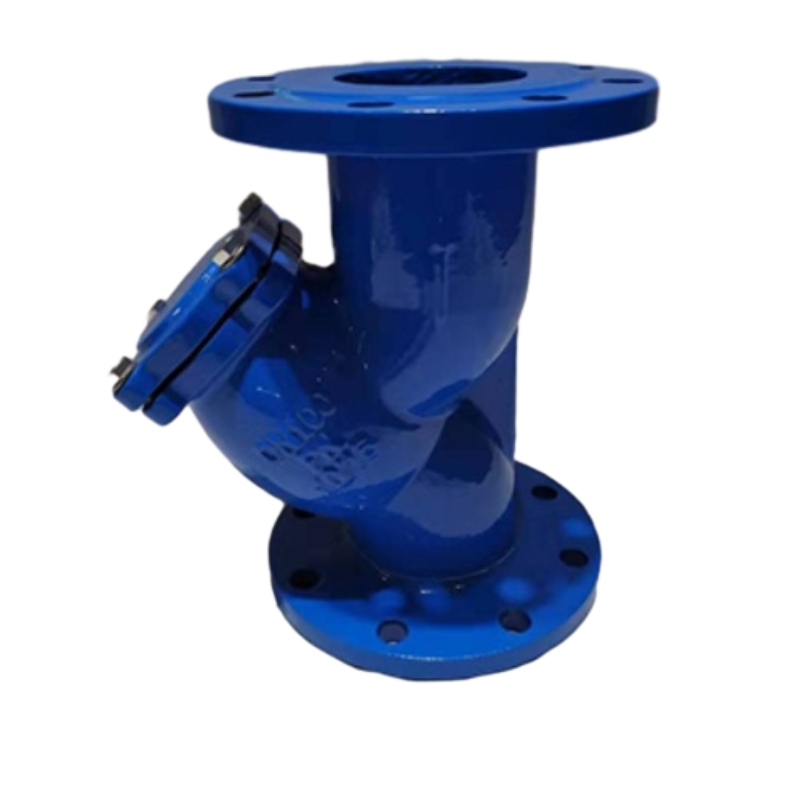
The Mechanics of Y-Type Filtration
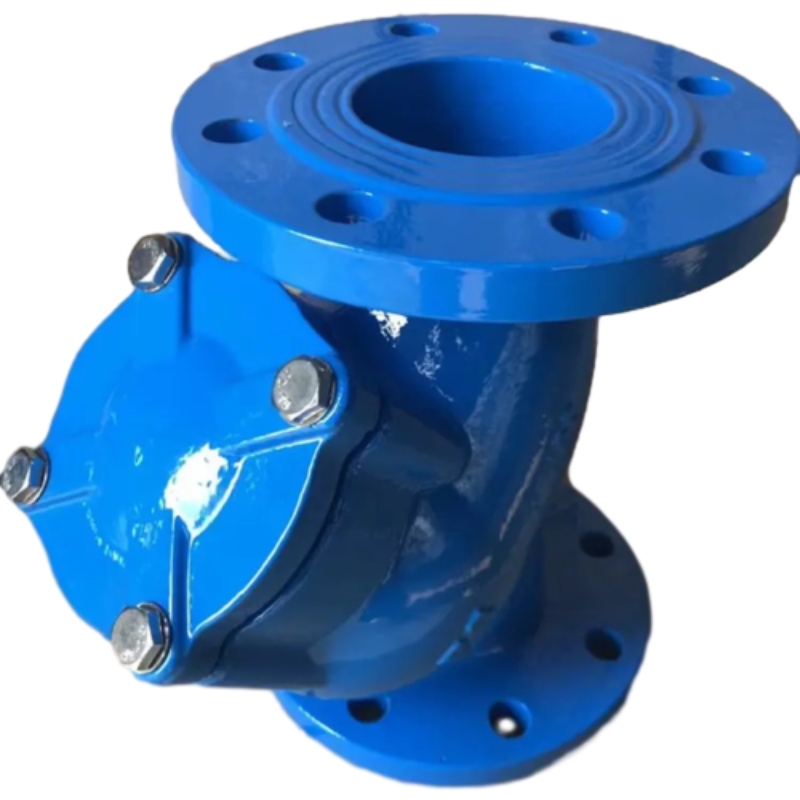
The Y-type strainer functions as a passive filtration device. As fluid enters the body, the diverter design forces the stream against a cylindrical filter basket. Solid impurities are captured within this basket, while the cleaned fluid exits through the main outlet. This design is specifically intended to reduce the linear velocity of the fluid at the filtration point, preventing the screen from clogging instantaneously.
Unlike T-type or bucket strainers, the Y-configuration is uniquely suited for both horizontal and vertical orientations. When installed vertically with a downward flow, gravity assists in keeping the debris settled at the bottom of the leg, which simplifies the discharge process via the flange cover or an optional blow-off valve.
Critical Design Elements and Materiality
Material selection is the first line of defense against systemic failure. For standard water and gas networks, QT450 ductile iron is often utilized due to its superior strength-to-weight ratio and resistance to thermal shock compared to standard gray cast iron. In more aggressive chemical environments, stainless steel 304 or 316L is mandatory to prevent corrosion that could introduce further metallic contaminants into the stream.
The structural integrity of the filter basket is equally important. A cylindrical basket design provides significantly more mechanical strength than a single-layer flat screen, ensuring that the mesh does not collapse under high-pressure surges. This robustness is critical in industrial settings where pressure fluctuations are common.
Furthermore, the integration of a pressure testing hole on the body allows for quality verification before installation. For systems requiring zero-interruption cleaning, the replacement of a standard screwed plug with a ball valve enables "pressure dredging," where debris is flushed out of the system without removing the bonnet.
Pressure Drop and Flow Dynamics
One of the primary concerns when installing a strainer is the impact on the overall system pressure. A poorly designed filter creates a "bottleneck" effect, increasing the workload on pumps and potentially causing cavitation. The goal is to achieve high filtration efficiency while maintaining a low pressure drop across the device.
To minimize flow resistance, the total surface area of the filtration mesh should ideally be 3 to 4 times the diameter of the nominal pipe (DN). This ensures that the fluid velocity through the mesh remains low, reducing the pressure differential and extending the time between cleaning cycles.
Scientific fluid channel design ensures that the flow is distributed evenly across the filter basket. When the flow is laminar and well-distributed, the capture rate of particles is maximized, and the risk of "channeling"—where fluid bypasses parts of the filter—is eliminated.
Filtration Precision and Mesh Scaling
Filtration precision is defined by the mesh count, which determines the size of the particles that can pass through. Selecting the wrong mesh can lead to either premature clogging (too fine) or inadequate protection of downstream valves (too coarse). The selection depends entirely on the media and the sensitivity of the equipment being protected.
In typical industrial water networks, a mesh range of 18-30 is standard. For ventilation systems, 10-100 mesh is used to capture airborne particulates. In high-precision oil-passing networks, the requirements jump to 100-480 mesh to prevent microscopic shavings from damaging high-tolerance hydraulic components.
Figure 2. Relative Filtration Efficiency vs. Media Type
Application-Specific Operational Scenarios
In a typical chemical processing plant, a Y-type strainer is installed immediately upstream of centrifugal pumps. This placement prevents rust flakes from the carbon steel piping from entering the pump impeller, which would otherwise cause imbalance and vibration. By blocking these particles, the operational lifespan of the pump can be extended by up to 25%, significantly reducing the cost of mechanical seal replacements.
In pharmaceutical or food-grade pipelines, the focus shifts to hygiene and precision. Here, the use of 316L stainless steel flanged strainers is critical. These units must be designed for easy disassembly to ensure that the internal mesh is cleaned without leaving residue. The use of a telescopic design in these settings allows for rapid removal and replacement of the filter basket, ensuring that production batches are not contaminated by outdated filtration media.
Maintenance Strategies for Continuous Flow
Effective maintenance of a filtration system is a balance between cleaning frequency and operational downtime. The most critical indicator for maintenance is the differential pressure (ΔP) across the strainer. When the pressure drop exceeds a predefined threshold, it indicates that the basket is saturated with debris and requires immediate attention.
For systems where shutdown is not an option, a duplex strainer configuration is often employed, though a single Y-strainer with a blow-off valve is a cost-effective alternative. By opening the bottom drain valve, a high-velocity burst of fluid can clear a significant portion of the deposited particles, delaying the need for a full manual cleaning of the basket.
Manual cleaning should involve unscrewing the flange cover, removing the stainless steel mesh, and rinsing it with a high-pressure water jet or a compatible chemical solvent. It is essential to inspect the mesh for tears or corrosion during this process; a compromised screen allows contaminants to bypass the filter, rendering the entire protection strategy useless.
Selection Framework for Industrial Piping
Selecting the correct strainer requires a cross-referencing of fluid media, temperature, pressure, and required particle capture size. A common error in selection is ignoring the thermal expansion of the body material, which can lead to flange leaks in steam-heated pipelines.
Engineers must also consider the "full bore" versus "reduced diameter" options. Full bore strainers are preferred for high-flow applications to keep pressure drop at a minimum, while reduced diameter versions are used in compact spaces where the flow rate is not the primary constraint.
The following framework provides a comparative view of material and design suitability based on common industrial requirements, helping users align their technical specifications with the actual operational environment.
| Media Type | Recommended Material | Typical Mesh Range | Primary Selection Factor |
|---|---|---|---|
| Industrial Water | QT450 Ductile Iron | 18 - 30 Mesh | Corrosion Allowance |
| High-Temp Steam | Carbon Steel / Alloy | 20 - 40 Mesh | Thermal Expansion |
| Corrosive Chemicals | Stainless Steel 316L | 40 - 100 Mesh | Chemical Compatibility |
| Hydraulic Oil | Stainless Steel | 100 - 480 Mesh | Particle Precision |
| Natural Gas | Ductile Iron / Steel | 10 - 60 Mesh | Pressure Rating (PN) |
| Potable Water | Stainless Steel | 30 - 80 Mesh | Hygiene Standards |
Questions & Answers
The Y-shape creates a diverter that allows the main fluid stream to continue through the primary pipe while forcing debris into a separate "leg" containing the filter basket. This prevents the filter screen from being directly in the path of the full-force flow, which reduces the pressure drop and prevents the mesh from clogging as quickly as it would in a straight-through inline configuration. Additionally, it allows for easy access to the debris basket without dismantling the entire pipeline.
Selecting a mesh that is too fine (e.g., using a 100-mesh screen for general industrial water) leads to a rapid increase in differential pressure. This occurs because the smaller apertures capture even harmless microscopic particles, filling the basket quickly. The result is a significant drop in flow rate and increased strain on the pump, potentially leading to pump cavitation or systemic failure. It also increases maintenance costs due to the need for more frequent cleaning cycles.
Yes, it can be installed in a vertical orientation. However, the direction of flow is critical. If the flow is moving upwards, the debris will accumulate in the bottom of the Y-leg. While the strainer will still filter the fluid, cleaning is more complex because gravity will not assist in the discharge of debris. In such cases, the flange cover must be completely removed to extract the basket, making the installation of a blow-off valve at the bottom of the leg highly recommended.
QT450 ductile iron contains nodular graphite, which gives it far greater ductility and tensile strength than the flake graphite found in standard gray cast iron. This makes it significantly more resistant to cracking under pressure surges (water hammer) and thermal expansion. In high-pressure environments, ductile iron provides a safety margin that prevents catastrophic brittle failure, ensuring the strainer can withstand the mechanical stresses of industrial operation over many years.
The most accurate method is to install differential pressure gauges upstream and downstream of the strainer. The cleaning interval should be based on the "Delta P" (difference in pressure). Once the pressure drop reaches a specific limit—usually defined by the pump's performance curve—cleaning is required. If gauges are not available, intervals are typically set based on historical debris accumulation rates, but this is less precise and risks unplanned downtime if a sudden surge of contaminants occurs.
Carbon steel lacks the protective chromium oxide layer found in stainless steel. In corrosive environments, the steel will oxidize and pit rapidly. This not only weakens the structural integrity of the strainer body and flanges but also introduces rust particles directly into the fluid stream. This creates a paradoxical situation where the strainer itself becomes the source of the contamination it was meant to prevent, potentially damaging downstream precision equipment.
Final Thoughts
The longevity of any industrial fluid system is inextricably linked to the quality of its filtration. By employing a Y-type strainer with a scientifically selected mesh and a material compatible with the operating media, businesses can transform their maintenance approach from reactive to proactive. Protecting critical pumps and valves from debris is not merely a technical preference but a financial necessity to avoid the high costs of unexpected system failure.
As industrial requirements move toward higher precision and lower downtime, the integration of advanced features—such as blow-off valves and high-strength ductile iron bodies—will continue to be the benchmark for reliable pipeline protection. Ensuring that every water valve and pump is shielded by a correctly specified strainer is the most effective way to guarantee operational stability.