Nov Back to list
y type strainer Technical Analysis and Manufacturing Specifications
A single particle of rust or a small fragment of welding slag can be the catalyst for a catastrophic pump failure in a high-pressure pipeline. In industrial fluid handling, the invisibility of contaminants makes them particularly dangerous, necessitating a reliable primary defense mechanism to ensure system integrity.
The challenge for engineers is balancing filtration precision with flow efficiency. Too restrictive a filter causes excessive pressure drops, while too coarse a screen allows debris to reach critical valves and impellers, leading to erosion and unplanned downtime.
To address this, the y type strainer has become a fundamental component in water, oil, and gas networks, offering a geometric solution to the problem of debris capture without compromising throughput.
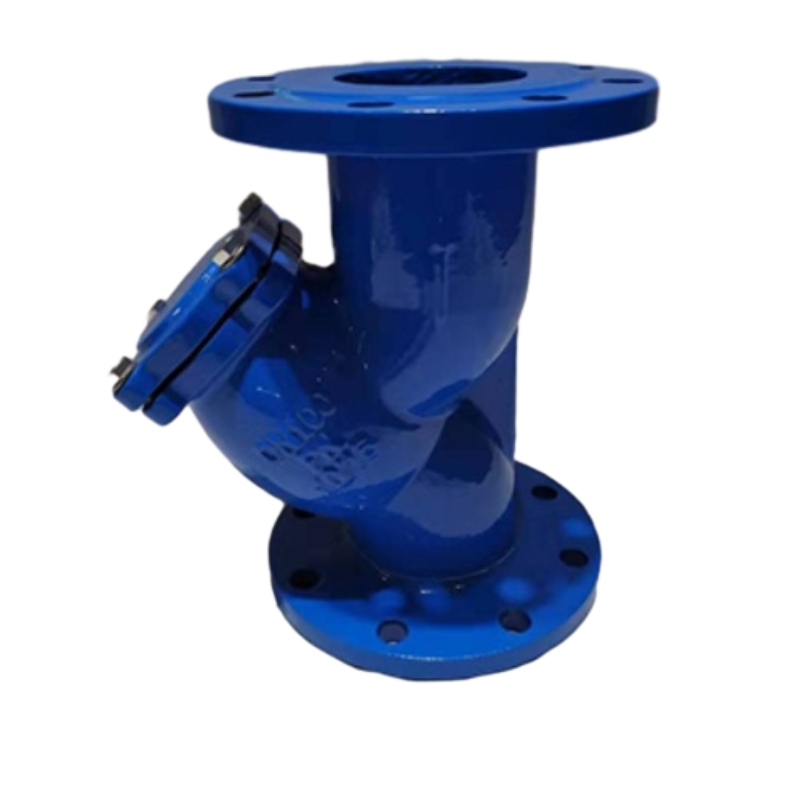
The Geometry of Pipeline Filtration
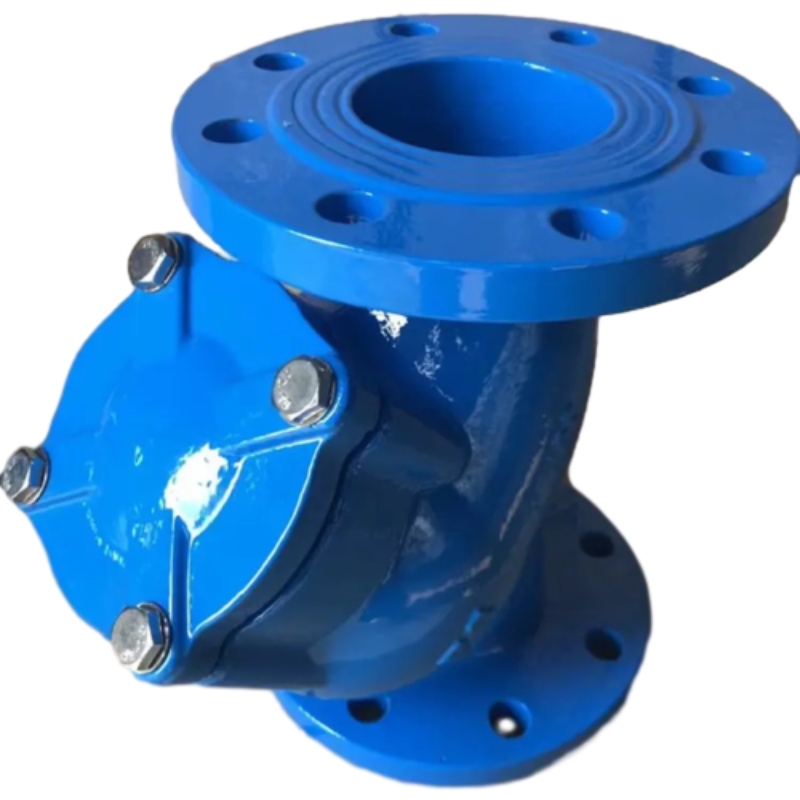
Unlike inline filters that occupy the direct path of the fluid, the Y-type configuration utilizes a divergent leg to house the filter element. This allows the main flow to maintain a relatively linear trajectory while forcing impurities into the cylindrical basket, effectively separating debris from the primary stream.
This design inherently reduces the risk of total blockage. Because the filter basket is offset, the system can often sustain a minimum flow even as particles accumulate, providing a critical safety window for maintenance teams to intervene before the pressure drop reaches critical levels.
Engineering the Filtration Mechanism
The internal architecture of a high-performance strainer revolves around the "filter blue" or basket. By utilizing a cylindrical shape rather than a flat screen, the surface area is maximized relative to the pipe diameter. In advanced designs, the total mesh area can reach 3 to 4 times the nominal diameter (DN) of the pipe, significantly lowering flow resistance.
The structural strength of the basket is paramount. A cylindrical mesh is naturally more resistant to the compressive forces of high-velocity fluid than a single-layer screen. This prevents the mesh from collapsing or folding under pressure, which would otherwise create "dead zones" and increase the localized velocity, potentially leading to premature wear of the screen.
Integration of fasteners and a secure flange cover ensures that the seal remains airtight under varying thermal conditions. The use of precision-machined interfaces prevents bypass—a common failure where fluid finds a path around the screen—ensuring that 100% of the fluid is subjected to the filtration process.
Material Integrity and Pressure Resistance
Material selection is governed by the chemical nature of the medium and the operating temperature. For standard water networks, QT450 ductile iron provides an optimal balance of castability and tensile strength, allowing the body to withstand pressure ratings such as PN10 while remaining cost-effective for large-scale installations.
The critical failure point in any filtration system is not the mesh itself, but the housing's ability to resist thermal expansion and mechanical stress without compromising the seal at the flange interface.
In more aggressive environments, such as chemical processing, 316L stainless steel is utilized to prevent corrosion. The transition from cast iron to alloy tools and stainless components is essential when dealing with sulfuric acid or high-temperature steam, where carbon steel would succumb to rapid oxidation or stress corrosion cracking.
Mesh Density and Media Compatibility
Selecting the correct mesh size is a trade-off between purity and pressure drop. A higher mesh count (e.g., 480 mesh) captures microscopic particles but increases the resistance to flow. Conversely, a coarse mesh (e.g., 18 mesh) allows for high flow rates but only stops large debris.
The industry generally categorizes mesh requirements by medium: water networks typically utilize 18–30 mesh for general debris, ventilation systems use 10–100 mesh to stop dust and scale, and oil-passing networks require 100–480 mesh to protect precision hydraulic components.
Figure 2. Relative Filtration Efficiency vs. Pressure Drop Index
Critical Placement in Industrial Layouts
The effectiveness of a y type strainer is heavily dependent on its position within the pipeline. The most critical placement is upstream of centrifugal pumps. By capturing rust and scale before they enter the pump casing, the strainer prevents impeller erosion and reduces vibration, which can extend the mean time between failures (MTBF) for the pump by up to 25%.
Beyond pumps, these devices are indispensable upstream of globe valves and check valves. In these components, a single piece of debris can prevent the valve seat from sealing perfectly, leading to internal leakage. In high-purity chemical lines, the strainer acts as the first line of defense, ensuring that catalyst fragments or welding slag from new pipe installations do not compromise downstream precision instruments.
Maintenance Evolution: From Shutdowns to Flow-through Cleaning
Traditionally, cleaning a strainer required a complete system shutdown and the manual removal of the bonnet to extract the mesh. This downtime is often more expensive than the cost of the hardware itself, especially in continuous production environments like refineries or power plants.
Modern engineering has introduced the "blow-down" or "dredging" capability. By replacing the standard screwed plug on the body with a ball valve connected to a sewage pipe, operators can discharge accumulated debris using system pressure. This allows for "pressure dredging" without removing the bonnet, keeping the fluid moving while removing the bulk of the particulates.
Furthermore, the move toward telescopic types and quick-release flange covers has reduced the time required for a full mesh replacement. When paired with a dual-strainer setup (simplex vs. duplex), industries can switch flow to a standby unit, allowing for zero-downtime maintenance of the primary filter.
Technical Selection Framework
Selecting the right strainer requires a systematic evaluation of flow rates, media temperature, and the permissible pressure drop. For example, a DN150 ductile iron strainer operating in water at 85°C has very different structural requirements than a DN400 stainless steel unit handling high-velocity steam.
The "full bore" versus "reduced diameter" choice is another key decision. Full bore strainers minimize flow restriction and are preferred for high-viscosity fluids, while reduced diameter models are more compact and suitable for systems where space is limited and the fluid is low-viscosity.
Ultimately, the decision framework should prioritize the protection of the most expensive downstream asset. If a precision control valve is the critical component, the selection should lean toward higher mesh densities and corrosion-resistant alloy materials to ensure absolute fluid purity.
| Media Type | Recommended Material | Mesh Range | Primary Goal |
|---|---|---|---|
| Industrial Water | Ductile Iron (QT450) | 18 - 30 Mesh | General Scale Removal |
| Compressed Air | Cast Iron / Carbon Steel | 10 - 100 Mesh | Dust & Moisture Trap |
| Hydraulic Oil | Stainless Steel (316L) | 100 - 480 Mesh | Precision Valve Protection |
| Chemical Acid | Stainless Steel / Alloy | 40 - 200 Mesh | Corrosion Resistance |
| High-Temp Steam | WCB Carbon Steel | 20 - 60 Mesh | Thermal Stability |
| Marine Cooling | Nickel Aluminum Bronze | 10 - 40 Mesh | Bio-fouling Prevention |
Questions & Answers
The primary difference lies in the geometry and the volume of the debris collection area. A Y-strainer features a 45-degree angled leg, making it ideal for smaller to mid-sized pipes and allowing for installation in both horizontal and vertical (downward flow) orientations. A T-strainer has a 90-degree perpendicular leg, providing a larger collection volume and typically better suitability for very high flow rates or larger pipe diameters where a Y-shape would become too bulky.
The most professional way to monitor a strainer is by installing pressure gauges upstream and downstream of the device. The difference between these two readings is the "differential pressure." Once this pressure drop exceeds the manufacturer's specified limit for that specific mesh size, it indicates that the basket is clogged with debris and requires cleaning or replacement to prevent flow restriction.
Yes, but with a critical restriction: the fluid must flow in the direction of the Y-leg's downward angle. If installed vertically with the flow moving upwards, the debris will not settle into the basket but will instead be pushed against the screen or potentially bypass it. For upward vertical flow, a different filter type or a specialized T-strainer is usually recommended to ensure the debris is captured effectively.
If the mesh is too fine, the "pressure drop" increases rapidly. This forces the pump to work harder, increasing energy consumption and potentially leading to cavitation if the suction pressure drops too low. Furthermore, a very fine mesh clogs much faster, significantly increasing the frequency of maintenance shutdowns and increasing the overall operational cost of the system.
Ductile iron (such as QT450) contains spherical graphite nodules, which give it significantly higher tensile strength and ductility compared to the flake graphite in standard grey cast iron. This makes ductile iron far more resistant to impact and pressure surges (water hammer), reducing the risk of the housing cracking under extreme operational stress.
Absolutely. While stainless steel 304/316 is standard, extreme environments may require Monel, Hastelloy, or titanium mesh. The selection depends on the specific corrosive agents present in the fluid. Matching the mesh material to the housing material is also important to avoid galvanic corrosion, which can happen when two dissimilar metals are in contact in a conductive fluid.
Final Thoughts
The Y-type strainer remains an indispensable tool in industrial fluid management because it solves a fundamental problem: the need for reliable particle removal without compromising systemic flow. By integrating a scientifically designed cylindrical basket and choosing materials like QT450 ductile iron or 316L stainless steel, operators can safeguard their most expensive assets—pumps and valves—from the silent erosion of pipeline debris.
As industrial systems move toward higher automation and lower tolerance for downtime, the focus is shifting from simple filtration to "intelligent" maintenance, such as pressure-dredging and differential pressure monitoring. Investing in a correctly specified strainer is not merely a plumbing decision, but a strategic move to reduce total cost of ownership and ensure long-term operational stability.
- y type strainer Technical Analysis and Manufacturing Specifications
- Pin Gauges for Sale Technical Performance Analysis
- Pin Gauge Measuring Tool Performance Analysis
- Heart Valves and Industrial Fixtures which valves are anchored by chordae tendineae Performance Analysis
- Spirit Level Technical Analysis and Performance Metrics