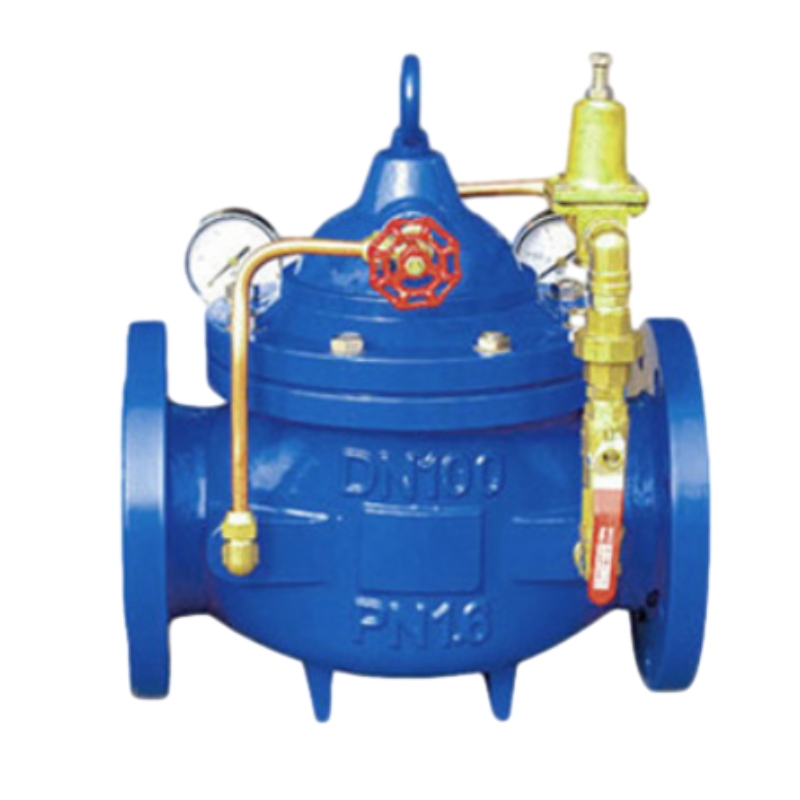

Slow Closing Check Valve
The 300X slow-closing muffler check valve features a novel design for reliable sealing, low resistance, high flow, and long service life. It controls the opening and closing speed of the main valve, can be adjusted to suit site requirements, and provides slow-closing muffling by water-hammer effects.
Product Description
The 300X slow-closing muffler check valve features a novel design that delivers a reliable sealing performance, low flow resistance, high flow capacity, and a long service life. It can control the opening and closing speed of the main valve to match operating conditions, helping eliminate water hammer effects and achieve stable slow-closing operation.
The Advantages of Slow-Closing Check Valves in Modern Applications
In fluid control systems, selecting the right valve technology is essential to ensure both efficiency and long-term reliability. One of the most impactful innovations in this field is the slow-closing check valve, which offers distinct advantages for a wide range of industrial applications.
First and foremost, the primary benefit of a slow-closing check valve is its ability to prevent water hammer. Water hammer occurs when fluid in motion is forced to stop or change direction suddenly, which can generate severe pressure surges in pipelines. These surges may damage piping systems and connected equipment. By enabling gradual closure, the valve reduces flow velocity step by step, effectively mitigating shock waves and protecting infrastructure.
In addition, slow-closing check valves improve operational efficiency. By regulating the closing speed, they reduce energy losses during fluid transfer and minimize turbulence within the system. As a result, operating costs decrease and system reliability increases. This makes them a preferred choice across sectors such as water treatment, oil and gas, and chemical processing.
Another key advantage is the extended service life of the valve itself. Conventional check valves that close rapidly often experience accelerated wear. In contrast, slow-closing check valves experience less operational stress, reducing maintenance needs and supporting longer continuous service. This durability is especially valuable in demanding installations where maintenance downtime can be costly.
In summary, slow-closing check valves deliver substantial value through water hammer mitigation, improved operating efficiency, and longer equipment lifespan. As industries continue to seek dependable and cost-effective fluid control solutions, demand for slow-closing check valves is expected to grow further, reinforcing their role in effective fluid management.
"Water Hammer Buster": How the 300X Slow-Closing Check Valve Tames 99% of Pipeline Surges with a Dual-Chamber Design
STORAEN’s slow-closing check valve enhances pipeline safety through an advanced dual-water-chamber system, specifically engineered to eliminate the damaging effects of water hammer in pumping applications. Unlike conventional non-return check valves that may close abruptly and cause pressure surges, the 300X model combines rapid initial shutoff with a controlled gradual closure—making it an ideal solution for high-rise buildings, industrial pipelines, and water treatment plants.
The Technology Behind Dual-Chamber Performance
At the core of this backflow preventer check valve is a two-part hydraulic mechanism:
1. Upper & Lower Water Chambers: A piston-style disc separates the valve into two chambers. The chambers are connected by a precision needle valve that regulates fluid flow between them.
Stage 1: Rapid Emergency Shutoff (80% stroke in 2 seconds): When the pump stops, the disc closes quickly to arrest high-velocity backflow. This helps prevent immediate damage to pumps and valves, which is critical for protecting high-value equipment such as centrifugal pumps.
Stage 2: Gradual Pressure Relief (remaining 20% stroke over 10–60 seconds): The needle valve controls the flow from the upper to the lower chamber, allowing the disc to close slowly and evenly. This dissipates residual pressure and suppresses water hammer peaks to ≤1.5x working pressure—99% more effective than standard backcheck valves.
Why the Dual-Chamber Design Outperforms Other Types of Check Valves
Noise & Vibration Control: The slow final closure reduces the characteristic “water hammer bang.” Compared with quick-closing models, noise is reduced by 40%, making it suitable for residential areas and noise-sensitive facilities.
Extended Equipment Life: By minimizing pressure surges, it reduces pump seal wear by 30% and valve seat erosion by 50%. As a result, it can outperform conventional 1/2 one-way check valves or 2-inch check valves in harsh operating conditions.
Versatile Design for Diverse Applications
Available in sizes from 1/2-inch check valve (DN15) to 2-inch check valve (DN50) and beyond (up to DN600), the 300X model is suitable for a wide range of systems:
Material Options:
Ductile Iron: Cost-effective for industrial water and gas applications (1.0–2.5MPa, -10°C–80°C).
Brass: Corrosion-resistant for potable water or marine applications (an ideal alternative to stainless steel check valves in low-pressure setups).
Stainless Steel 316: Built for heavy-duty service with chemical media or high-temperature conditions (up to 150°C).
Installation Flexibility: Flanged connections (RF/FF) comply with ASME B16.5 and GB/T 17241.6, allowing seamless integration into both new pipelines and retrofit projects.
Key Performance Metrics
Low Pressure Activation: Closure begins at just 0.05MPa, supporting reliable operation in low-head systems.
Low Flow Resistance: A streamlined disc design helps reduce pressure drop by 25% compared with swing-type check valves, supporting improved energy efficiency.
Cycle Life: 50,000+ operations without seat wear—twice the industry average for slow-closing check valves.
Choose the Right Check Valve for Your System
Whether you require a 1/1/2-inch check valve for a small HVAC loop or a larger DN300 model for industrial pumping, STORAEN’s dual-chamber technology provides exceptional protection. Unlike generic check valve types that may compromise on safety or efficiency, the 300X model provides three critical benefits in one solution: backflow prevention, water hammer elimination, and noise reduction.
Upgrade your pipeline safety today with the slow-closing check valve trusted by engineers. Explore the STORAEN range and see how intelligent design improves fluid control—because in pipelines, prevention is always better than repair.
Cast Iron vs. Brass Materials: A Corrosion-Resistant Selection Guide for Slow-Closing Check Valves
Selecting the correct material for a slow-closing check valve is essential to achieve long-term performance, particularly when the medium is corrosive. STORAEN provides two primary options—cast iron and brass—each suited to specific industrial and commercial applications. This guide explains the key differences and supports selection for your pipeline requirements, while also comparing materials against other check valve solutions.
1. Cast Iron: Heavy-Duty Durability for Industrial Demands
Cast iron check valves (e.g., QT450 ductile iron) are the preferred choice for harsh, high-pressure environments. With a tensile strength of 450MPa, the material supports operating conditions up to 2.5MPa and temperatures from -10°C to 80°C, making it well-suited for abrasive fluids such as sewage, industrial water, or particle-laden media. The robust surface texture promotes reliable sealing, helping minimize leakage in high-flow systems. While cast iron naturally resists mild corrosives (pH 6–8), optional epoxy coatings enhance protection against moderate acids and alkalis. However, it is not suitable for seawater or highly aggressive chemicals—where stainless steel check valves are recommended.
Best for: Industrial pipelines, wastewater plants, and HVAC systems where abrasion and high pressure are key concerns. Suitable for use with pilot-operated check valves in automated pumping stations.
2. Brass: Precision and Purity for Clean Media
Brass check valves (e.g., HPb59-1 lead-free brass) are ideal for applications requiring hygiene and resistance to non-aggressive fluids. Their smooth surface finish (Ra 3.2) meets FDA requirements for potable water and food-grade pipeline systems, making them suitable for drinking water systems and marine installations. Lighter than cast iron, brass is easier to install in tight spaces, such as residential plumbing that uses 1/2-inch one-way check valves. Brass resists freshwater and steam (≤150°C), as well as non-oxidizing acids, but may corrode in ammonia or high-temperature seawater. For such conditions, consider nickel-plated chemical check valves.
Best for: Drinking water systems, marine applications, and small-scale industrial setups (e.g., 2-inch check valves in boiler feed lines). A strong option for backflow preventer check valves in residential buildings due to lead-free compliance.
Key Decision Factors
Media Type: Choose cast iron for dirty, particle-laden fluids; choose brass for clean water or food-grade media.
Pressure/Temperature: Cast iron supports higher pressures (up to 2.5MPa) but lower temperature limits (80°C max); brass suits medium pressures (≤1.6MPa) and provides better heat conductivity.
Hygiene & Installation: Brass emphasizes purity and ease of installation in smaller diameters; cast iron supports cost-effective use in larger pipelines (DN50–DN600).
When to Consider Stainless Steel
For extreme corrosive environments (seawater, hydrochloric acid), STORAEN’s stainless steel check valves (304/316L) offer superior resistance, although at a higher cost. These are recommended for backflow preventer applications in chemical plants or offshore platforms, where long-term reliability outweighs initial investment.
Make the Right Choice for Your System
Your selection between cast iron and brass for a slow-closing check valve depends on your medium’s corrosiveness, pressure requirements, and hygiene considerations:
Industrial toughness: Select cast iron for abrasion resistance and high-pressure capability.
Clean systems & smaller sizes: Select brass for purity and straightforward installation.
Severe corrosion: Upgrade to stainless steel for aggressive chemicals or marine use.
STORAEN’s materials are engineered to match different check valve operating conditions, ensuring not only backflow prevention but also dependable long-term performance. Explore our range today and secure your pipeline with the right material—built for durability and designed for efficiency.
Product Parameter
Nominal pressure: 1.0MPa / 1.6MPa / 2.5MPa
Low action pressure: ≥0.02MPa (reference value)
Specification caliber: 50 to 600 mm
Medium temperature: 0 to 80°C
Applicable medium: clean water
Connection form: flange
Shell material: cast iron or brass
Product Detail Drawing
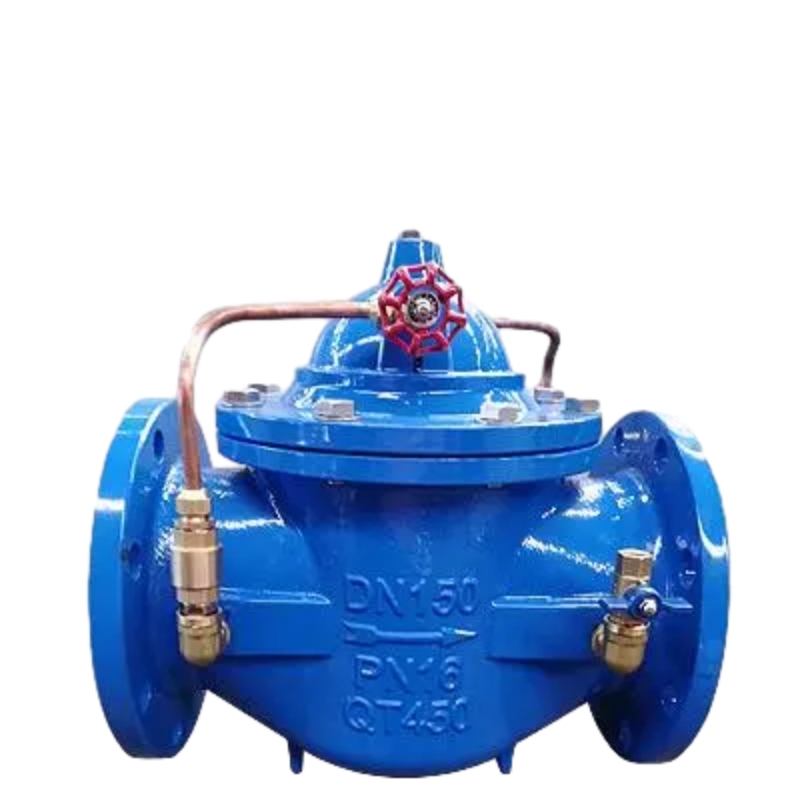
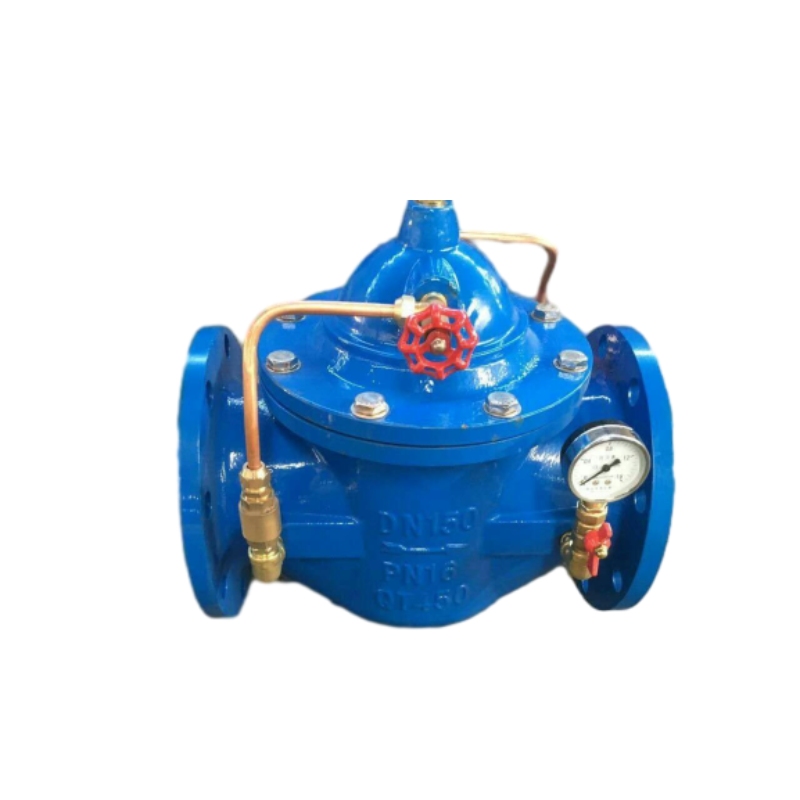
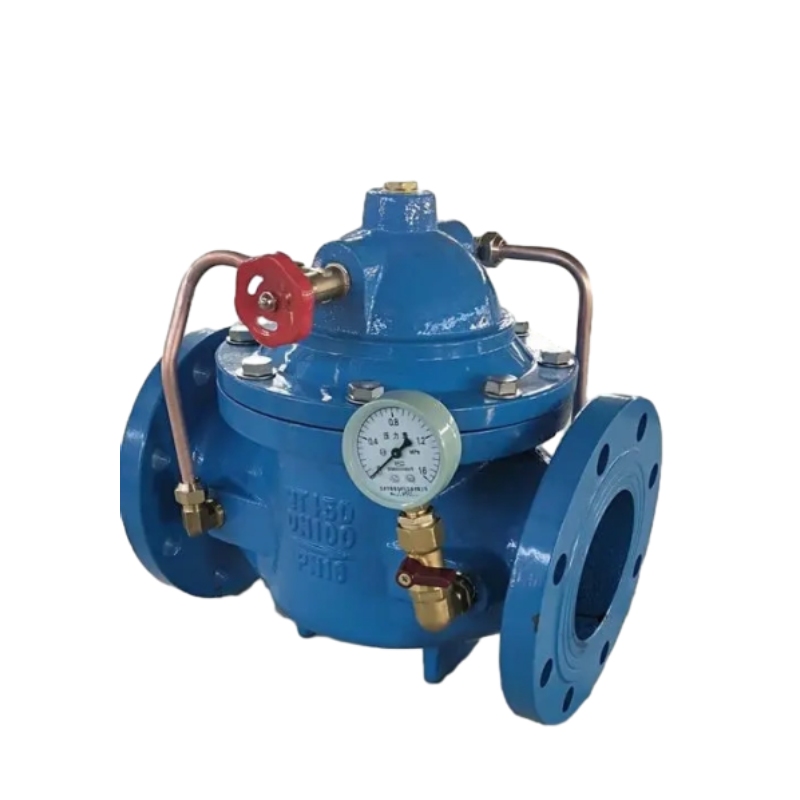
Product Working Principle
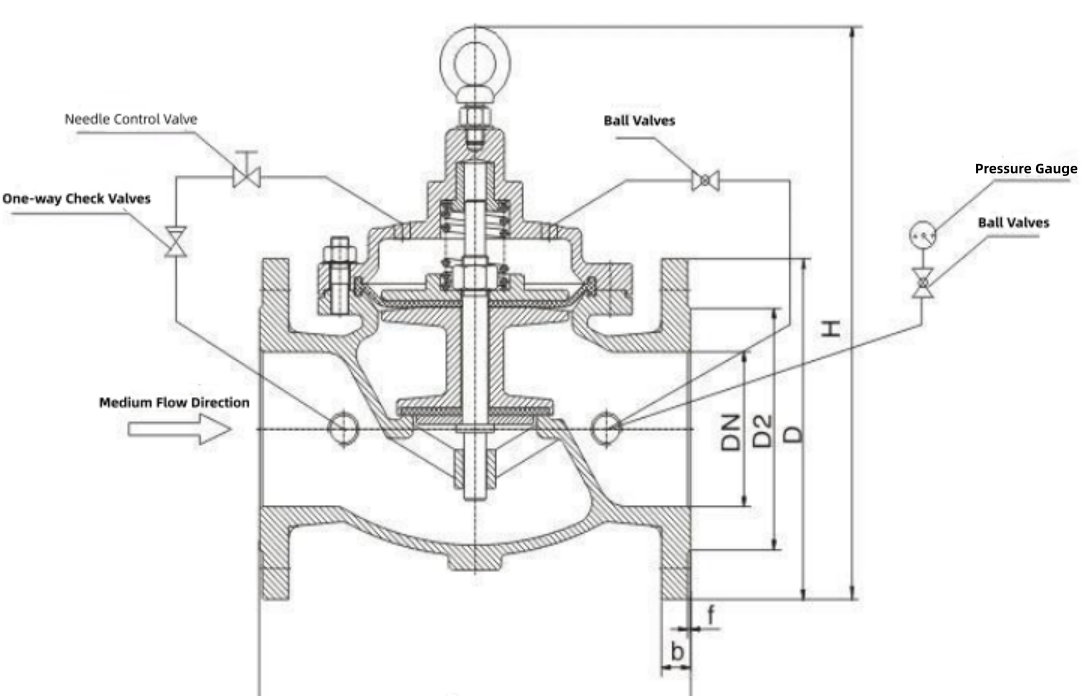
This valve incorporates two internal water chambers. The diaphragm under the water chamber controls the cutoff within the water channel (with a large effective opening area close to the pipe diameter). The diaphragm on the water chamber serves as a pressure regulator. When the pump stops, the valve disc closes approximately 90% of the remaining opening based on the combined effect of the disc’s self-weight and the pressure in the water chamber. After the pressure acts on the upper water chamber and the pressure in the water chamber increases further, the cutoff closes gradually over the remaining 10%. This slow closure provides the muffling function and enables stable slow-closing operation.
Installation Requirements
Install a strainer upstream of the 300X slow-closing muffler check valve. You may choose to install a Y-type filter or a basket filter.
During installation, ensure the arrow direction marked on the valve body is correct. To support maintenance, leave sufficient space around the check valve.
Install a stop valve with a corresponding diameter at the location where the water supply can be isolated when the 300X slow-closing muffler check valve requires repair.
Slow Closing Check Valve FAQs
What is a Slow Closing Check Valve used for?
A slow-closing check valve is designed to prevent backflow in piping systems while minimizing water hammer effects caused by sudden stops. By allowing the valve to close gradually, it provides a smooth transition that helps protect your system and extends the service life of your plumbing components.
How does the Slow Closing Check Valve work?
This valve uses a controlled closing mechanism. When fluid flow stops, the valve closes slowly rather than abruptly. This helps prevent pressure surges and reduces the risk of damage. The feature is particularly important in applications involving pumps, boilers, and other equipment that is sensitive to hydraulic shocks.
What materials are used in the construction of the Slow Closing Check Valve?
Our slow-closing check valves are typically constructed using high-quality materials such as brass or stainless steel to support durability and corrosion resistance. Material selection improves overall performance and helps ensure long-lasting operation in different environments.
Can the Slow Closing Check Valve be installed in any orientation?
Yes. The slow-closing check valve is designed for flexible installation and can be mounted in either a horizontal or vertical orientation, making it suitable for different piping configurations. For optimal performance, please refer to the installation guidelines.
Is maintenance required for the Slow Closing Check Valve?
While the slow-closing check valve is designed for minimal maintenance, periodic inspections are recommended to confirm optimal performance. Check for any buildup, perform visual inspections for leaks or wear, and ensure the mechanism is free from obstructions to help prolong service life.
What are the benefits of using a Slow Closing Check Valve compared to standard check valves?
The main advantage is its ability to mitigate water hammer, which can create damaging shock waves in plumbing systems. In addition, gradual closure helps reduce noise, improves system reliability, and supports better overall performance—making it suitable for higher-pressure applications.
Can this valve be used in commercial applications?
Yes. The slow-closing check valve is suitable for both residential and commercial applications. Its ability to handle varying flow rates and pressures makes it a strong choice for buildings, industrial processes, water treatment facilities, and more.